
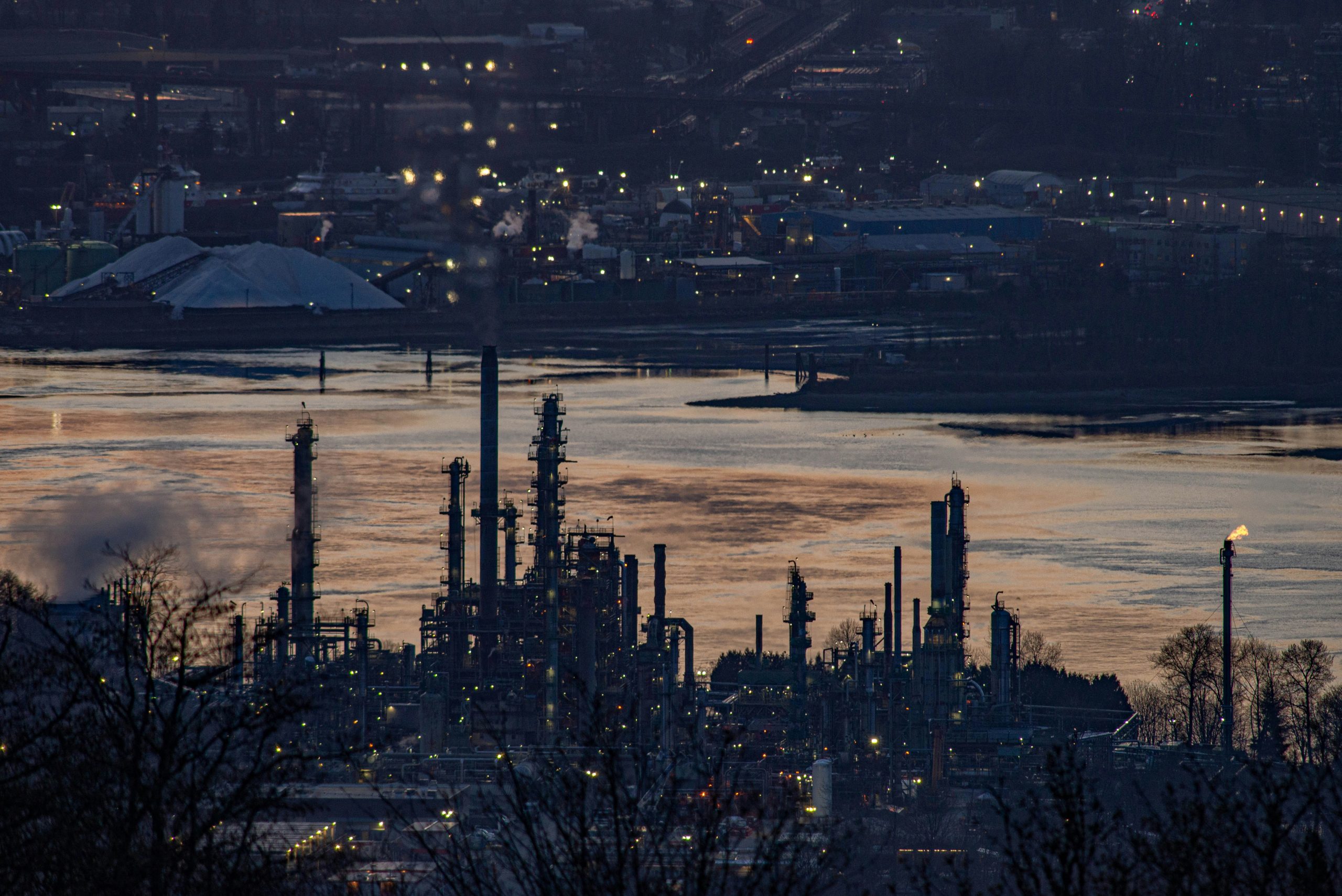
Environmental Forensic Notes – CERCLA’s Petroleum Exclusion and the Use of Chemical Forensic Methods
written by Tarek Saba, Ph.D., Principal Scientist & Office Director at Exponent, Inc.
tsaba@exponent.com; cell: 617.510.8202
This issue of Environmental Forensic Notes discusses the use of chemical forensic methods to determine the petroleum exclusion’s applicability at Comprehensive Environmental Response, Compensation, and Liability Act (CERCLA) sites, such as former refineries and petroleum terminals. Note that this article is not intended to be legal advice and any discussion of legal liabilities and exemptions is for discussion purposes only.
CERCLA’s Petroleum Exclusion
To incur liability under CERCLA, a release of a hazardous substance or waste into the environment must have occurred. CERCLA defines hazardous substances by reference to other statutes such as the Resource Conservation and Recovery Act (RCRA), among others.[1]
However, the petroleum exclusion clause under CERCLA[2] excludes all chemical constituents indigenous to crude oil and petroleum products from the definition of hazardous substances and from liability under CERCLA. For example, benzene, toluene, ethylbenzene, and xylenes (BTEX) and polycyclic aromatic compounds (PAH) originating from a petroleum product release are excluded from CERCLA liability. Further, CERCLA’s petroleum exclusion includes in its definition the chemicals that are normally mixed with or added to crude oil or petroleum products during the refining process (i.e., additives such as methyl tert-butyl ether [MTBE] and lead added to gasoline). Therefore, the mere presence of these common chemical constituents in the free product recovered at a site does not indicate the presence of hazardous waste.
Determining the origin of contamination (whether petroleum-excluded material, hazardous substances, or a mix) requires careful application of forensic methods including, but not limited to, chemical fingerprinting techniques.[3]
What Is a “Hazardous Waste?”
Under RCRA, 40 CFR Part 261, the U.S. Environmental Protection Agency (EPA) defines hazardous waste as a “characteristic hazardous waste” or a “listed hazardous waste.”
- A characteristic hazardous waste meets one or more of the physical characteristics of ignitability, corrosivity, reactivity, and toxicity. These physical characteristics are defined by specific parameters (e.g., corrosivity has pH < 2 or pH > 12.5), which can be determined through waste analysis. Once a hazardous waste no longer exhibits the characteristic that caused the waste to be defined as hazardous, it is no longer labeled as a hazardous waste.
- A listed hazardous waste is a waste that appears on one or more of the specific hazardous waste lists in 40 CFR Part 261, Subpart D (e.g., EPA hazardous waste number K052 is for “tank bottoms (leaded) from the petroleum industry”; see Table 1).
Table 1. Example EPA listed hazardous waste
| No. | Description |
| K048 | Dissolved air flotation (DAF) float from the petroleum refining industry |
| K049 | Slop oil emulsion solids from the petroleum refining industry |
| K050 | Heat exchanger bundle cleaning sludge from the petroleum refining industry |
| K051 | separator sludge from the petroleum refining industry |
| K052 | Tank bottoms (leaded) from the petroleum refining industry |
| K169 | Crude oil storage tank sediment from petroleum refining operations |
| K170 | Clarified slurry oil tank sediment and/or in-line filter/separation solids from petroleum refining operations |
| K171 | Spent hydrotreating catalyst from petroleum refining operations, including guard beds used to desulfurize feeds to other catalytic reactors (this listing does not include inert support media) |
| K172 | Spent hydrorefining catalyst from petroleum refining operations, including guard beds used to desulfurize feeds to other catalytic reactors (this listing does not include inert support media) |
Composition of Crude Oil, Petroleum Products, and their Additives
Crude oil and petroleum products naturally contain a complex mixture of many organic compounds classified chemically by their structure. Some of these compounds include:
- BTEX;
- PAHs, including naphthalene, 2-methylnaphthalene, acenaphthene, anthracene, fluorene, fluoranthene, pyrene, phenanthrene, benz[a]anthracene, benzo[a]pyrene, benzo[e]pyrene, benzo[b]fluoranthene, benzo[ghi]perylene, chrysene, indeno[1,2,3-cd]pyrene, dibenz[a,h]anthracene; and
- Metals that are indigenous to crude oils, including antimony, arsenic, barium, beryllium, cadmium, cobalt, copper, lead, manganese, mercury, nickel, selenium, silver, vanadium, and zinc, among other metals.
Additives that were used to improve the performance of petroleum products are, of course, present in these products. Some of the additives include:
- Phenolic compounds (used as antioxidants), including amino phenols, and other ortho-alkylated phenols, and tert-butyl-p-cresol;
- Alcohols, glycols, amides, amines, and organophosphate salts (used as anti-icing agents);
- Some halogenated hydrocarbons, such as dichloroethane and ethylene dibromide (used to improve flow in cold weather conditions);
- Tetraethyl lead and other organic leads (used as anti-knock additives); and
- MTBE (used as an additive to gasoline to reduce carbon monoxide emissions and increase fuel octane).
Chemical Forensics to Determine the Type and Source of Contamination
Ideally, a chemical fingerprinting program starts by collecting a set of samples representing petroleum and products from the refinery or petroleum terminal, waste samples, and background soil samples, which themselves can contain significant quantities of many naturally occurring metals (e.g., arsenic). In some cases, petroleum products of former refineries can be found in pipelines that may still exist onsite. Waste material samples may be obtained from waste lagoons or waste-carrying pipes. Background samples can be collected from locations not impacted by the former refinery operations. These samples represent the potential “end-member” sources to contaminated areas. In addition to the source samples, contaminated areas will have to be sampled.
After sample collection, a laboratory analytical program is designed to focus on chemical characterization of the samples. Once analytical data are generated, several fingerprinting techniques can be used to determine the origin of contamination at the locations in question. Some of these techniques include: [4]
- Gas chromatograms can be analyzed to determine the general hydrocarbon composition (e.g., crude oil or petroleum products like gasoline or diesel).
- Statistical analysis tools (e.g., principal component analysis) can be used to analyze metals and other chemical groups’ data. These tools compare the chemical composition of different sample groups to determine whether the samples in question resemble waste, petroleum-excluded material, background, or a mix.
- Chemical diagnostic ratios can be used to determine the concentration of one chemical compound divided by another, indicating relative amounts of both in a sample. These techniques are used in scientific literature to characterize and identify contamination sources. For example, the lead to arsenic ratio was used to differentiate contamination sources from background sources of these metals in one study.
- Chemical characteristics can be tracked along a plume of light, nonaqueous phase liquid (LNAPL). Crude oil and refinery products along an oil plume beneath a former refinery site preserve their chemical fingerprint characteristics. If an LNAPL plume traveling under a waste unit is impacted by hazardous waste, there may be a change in the fingerprint (for example, the gas chromatogram, or the PAH and metal ratios). Comparison of LNAPL samples collected upstream and downstream from a waste unit could provide clear evidence of hazardous waste impacts to the LNAPL plume, if any.
The ultimate goal of these listed fingerprinting techniques is to track chemical characteristics specific to waste. For example, settling sludges in tank bottoms are typically associated with wax crystals and asphaltene material. Gas chromatograms can identify the presence of such compounds to determine whether a sample is impacted by sludge waste. Also, some chemicals concentrate in hazardous waste at levels higher than their typical ranges in crude oil, petroleum products, or background. Statistical techniques can analyze chemical concentration ranges in a sample to evaluate whether that sample has been impacted by hazardous waste.
Challenges and Difficulties
In abandoned sites, petroleum products and wastes may no longer be available for sampling. In these instances, a forensic chemist may need to rely on older chemical data that are not likely to be of fingerprinting quality. Depending on the available historical chemical data, some of the chemical fingerprinting analysis techniques can still be used for evaluating whether hazardous wastes had impacted the site samples and for deciding whether CERCLA’s petroleum exclusion applies. For example, statistical techniques can be used to determine whether the historical metals data for the site’s soils exhibit a pattern similar to crude oil, petroleum products, or background versus hazardous wastes. In addition to the chemical evidence, forensic evidence (e.g., operational histories, cleanup histories, historical practices, aerial photographs) may be helpful in determining the history of operations and waste handling practices, and ultimately the applicability of the CERCLA petroleum exclusion to those abandoned sites.
Knowledge of the chemical characteristics of waste generated from refinery process units and petroleum terminals, an understanding of historical processes, and detailed knowledge of chemical fingerprinting tools are all required for successful determination of sources of contamination to environmental media.
[1] CERCLA defines hazardous substances by reference to sections of the following statutes: The Clean Water Act (CWA) section 311 (CWA Hazardous Substances); CWA section 307(a) (CWA Toxic Pollutants); Clean Air Act (CAA) section 112 (CAA Hazardous Air Pollutants); and RCRA section 3001 (RCRA Hazardous Wastes). Source: https://www.epa.gov/epcra/hazardoussubstance-designations-and-release-notifications.
[2] https://www.epa.gov/epcra/cercla-petroleum-exclusion.
[3] Other lines of evidence to support a petroleum exclusion case may include, for example, operational histories, cleanup histories, release reconstruction, and hydrogeology.
[4] See example analysis in Tarek Saba & Paul D. Boehm (2017): Determination of the applicability of
CERCLA’s petroleum exclusion at contaminated sites – focus on metals, Environmental Forensics,
DOI: 10.1080/15275922.2017.1408161
Back to Blog